


Ceramic Coatings
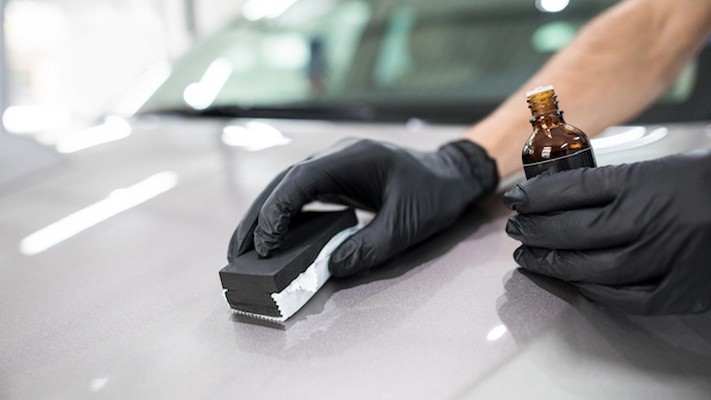
Ceramic coatings are perhaps one of the best things to happen in the world of car care since the introduction of Carnauba wax. They last for years, provide exceptional levels of gloss, protect against light swirl marks and repel water, making the vehicle easier to clean.
The problem, however, is that many people believe ceramic protection is something that is applied once and then simply works on its own. This is not entirely accurate.
Ceramic products require occasional maintenance to maximize their lifespan and prevent their performance from gradually diminishing over time due to exposure to environmental elements.
So, how does this deterioration occur and what can you do about it?
Loss of Gloss:
When a ceramic coating is applied and bonds with the surface, it looks amazing. Unfortunately, this effect can diminish over time, turning “amazing” into simply “decent.” If gloss levels are not important to you, this may not be an issue. However, if you want the maximum possible finish, “decent” is not enough.
So, what causes this decline? Naturally, it has to do with the way your paint reflects light.
Glossy surfaces shine because they are smooth and even.
When light rays hit the surface, they all reflect at the same angle. This concentrates the reflected light in a single direction, resulting in a glossy appearance.
However, when the surface is uneven due to fine scratches, oxidation, etc., these rays reflect at different angles, making the result appear inferior to the eye.
Therefore, the phenomenon described above is caused by wear of the coating in certain areas, creating an uneven surface that scatters the light.
But what causes this wear?
As your coating is exposed to the environment, it wears down due to friction. Everything from strong winds to washing mitts rubs against the surface on a microscopic level.
You will never notice this wear on a daily basis, but over time it can lead to reduced protection.
What does this mean for you?
Let’s assume a bug hits your bonnet while you are driving. With a ceramic coating, this is not a major issue, as it may slightly mark the protected surface but will not reach the vehicle’s paint. However, if your protection has been left for a long period without any maintenance, the situation may be different for your paintwork.
Reduction of Hydrophobic Properties
The behaviour of water on a hydrophobic surface is perhaps one of the most attractive and impressive effects of a protective coating.
In addition, this hydrophobic effect helps contaminants such as hard water and mud slide off the surface, protecting both the coating and the paintwork from wear.
However, the hydrophobic properties can begin to weaken if the recommended maintenance is not followed.
A ceramic coating naturally has a high level of hydrophobicity. The lower this level becomes, the more difficult it is for liquids to be removed from the surface.
This is where one of the issues arises, as this behaviour is not static. It can change if the surface accumulates deposits from various external contaminants, reducing or even reversing the hydrophobic effect.
This brings us to the next step: how do I maintain my ceramic coating?
** Do not lose patience simply follow the appropriate maintenance procedure.
There are two ways to do this.
Wash regularly and use maintenance booster products.
1- Regular washing should be carried out using the correct products, including suitable shampoos and maintenance solutions. Most manufacturers recommend washing every two weeks, which should remove surface contaminants before they have the opportunity to bond with the surface.
2- In addition to regular washing, maintenance booster products from each manufacturer will help preserve the coating.
These products are essentially highly concentrated versions of the ceramic formula.
When sprayed onto a ceramic coating, they fill minor imperfections, helping to restore gloss and return the surface properties to the correct levels.
I hope this has helped clear up some of the misconceptions surrounding ceramic coatings, particularly regarding their durability and their limitations under different conditions. Now, equipped with this knowledge, make sure you properly protect and maintain your coating.