

What is Paint Correction – Correction Detail?
What is Paint Correction – Correction Detail?
Paint correction refers to the process of removing imperfections from a vehicle’s clear coat and restoring it, often achieving results that are even better than when it was new.
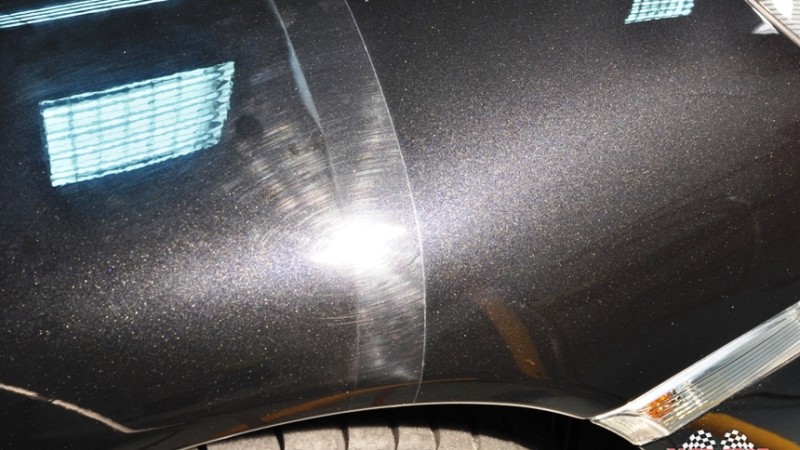
These imperfections include swirl marks or “spider web” marks caused by circular washing and wiping motions or automatic car washes, water spots, bird droppings, holograms caused by inexperienced “detailers,” and the list goes on..
A typical restoration job on your car will fill the scratches with Fillers.
In other words, the scratches will be hidden and will become visible again after you wash the vehicle a few times.
The only correct and recommended solution for removing scratches from your car’s paintwork is through the paint correction process.
How can I tell if my vehicle needs paint correction?
Have you ever looked at your car in the sunlight and thought that it looked as if it were covered in a spider web?
These are circular-shaped scratches and are caused by improper washing techniques.
Many people still wash their cars the old-fashioned way using circular motions, without following the correct procedure, and this is where these marks come from.
Because a circular scratch will always have a side that crosses directly through our line of sight and the reflection of the sun’s rays, it will be much easier to see.
However, if you wash the vehicle using front-to-back motions, the scratches will be uniform and will only be visible perpendicular to the car.
Why should I have paint correction done?
Whether you own a Toyota or a Ferrari, the first thing someone will notice about your car is its exterior appearance and how worn its paintwork looks.
What we actually see is often a reflection of our personality.
How is paint correction achieved?
Step 1: Washing Process Followed by Clay Bar
The first step in correcting a vehicle is to clean all bonded contaminants from its surface.
The process begins with a thorough wash and drying of the vehicle, followed by the clay bar stage.
A common misconception is that once a vehicle has been washed, it is clean.
While it may appear clean to the naked eye, the surface is often still covered with contaminants that require an additional step to remove them.
This step is known as “Clay Bar.”
Have you ever washed your car and then run your hand over the “clean” bodywork only to find that the surface has a rough texture?
In some cases, it may even feel as rough as sandpaper if there is heavy contamination or overspray.
This decontamination process is an important step before beginning the next correction stages, as you do not want these contaminants remaining on the surface of your car.
Step 2 (if required): Wet Sanding
Sometimes the correction process using abrasive polishing compounds alone is not enough to remove an imperfection from the vehicle’s surface.
Things such as deep scratches or orange peel need to be removed using a technique known as wet sanding, always taking into consideration the safety of the clear coat and its durability over time.
Step 3: Cutting and Polishing
Depending on a number of factors, such as the amount and type of clear coat, whether it is a single-stage paint or not, and the severity of the imperfections, the combination of machine and pad used during this stage will always vary from vehicle to vehicle.
For example, vehicles that have undergone wet sanding will require a multi-stage restoration process.
Many times, multiple stages are required for complete correction of the clear coat.
The first stage is usually the one that removes the deeper scratches, while the final stage brings the surface to perfect condition, fully restoring it from fine scratches while simultaneously bringing back its lost shine.
Step 4: Sealing the Vehicle
After all the correction work has been completed, it is time to seal the surface of the vehicle to protect it from further damage and provide long-term protection, so that we do not have to frequently repeat the complete correction process.
This stage, however, is where some shops attempt to conceal a poor paint correction process by using products that contain Fillers. This results in the phenomenon described at the beginning: after a few washes, once the Fillers have been removed, the imperfections on the surfaces become visible again.
There are four main types of products that we use:
- Polymer-based waxes
- Natural Carnauba waxes
- Sealants
- Ceramic Coats – Ceramic Coatings
Depending on which of the above we choose to seal our surface with, we will achieve the corresponding level of Gloss, Protection and Durability.